

Anxiety Symptoms: When Is Worrying No Longer Normal? | Safe and Sound
Symptoms of anxiety disorders aren't always easy to recognize, because anxiety is an emotion everyone experiences at some point in their lives. Feeling stressed before an exam, an interview, work pressure, or major life changes is normal.
However, if anxiety is prolonged, difficult to control, and begins to affect sleep, work, studies, or relationships, it may no longer be a normal reaction. Understanding the signs helps individuals recognize their condition early and seek appropriate support when needed.
What is an anxiety disorder, and how does it differ from ordinary anxiety?
Anxiety is a natural reaction when people face pressure, risk, or uncertainty. At appropriate levels, anxiety can help us prepare better, focus more, and be more cautious in important situations.
Common anxiety usually has a clear cause and subsides once the situation is resolved. For example, someone might be anxious before an exam, but the feeling of stress will ease after the exam is over.
Anxiety disorders differ in that feelings of anxiety are frequent, persistent, difficult to control, or disproportionate to the actual situation. Patients may constantly feel uneasy, find it difficult to relax, continuously think about worst-case scenarios, and feel their bodies are in a state of near-permanent tension.
What are the possible symptoms of anxiety disorders?
Anxiety disorders are not limited to just feelings of worry in the head. Symptoms can manifest in many ways: emotions, thoughts, behavior, and physical. Each person may experience them differently, but the common thread is that the signs are often persistent, recurring, and make it difficult for sufferers to live comfortably as before.
Some common symptoms include:
- Persistent anxiety, fear, or insecurity: Patients may frequently worry about their health, work, studies, finances, or relationships. Despite attempts to reassure themselves, the feeling of anxiety is difficult to alleviate, leaving them constantly stressed and exhausted.
- Always feeling like something bad is about to happen: Many people have a vague feeling that something bad is coming, even without obvious danger. The mind is often on alert, easily interpreting the situation in a negative light.
- Difficulty controlling the stream of anxious thoughts: Patients may constantly think about the same problem, imagine many worst-case scenarios, or overanalyze things that haven't happened yet. Even when they know they are worrying excessively, they still find it difficult to stop.
- Restlessness, difficulty relaxing, or inability to sit still: The body feels constantly on alert. Patients may experience agitation, tension, difficulty resting, irritability, or an inability to relax despite wanting to.
- Reduced concentration: Prolonged anxiety makes sufferers easily distracted, making it difficult to complete tasks, leading to poor academic performance, or taking longer to handle familiar tasks.
- Physical signs: Anxiety disorders can also be accompanied by nervousness, rapid heartbeat, shortness of breath, chest tightness, trembling hands and feet, dizziness, sweating, muscle tension, headache, neck and shoulder pain, abdominal pain, nausea, or sleep disturbances.
Not everyone experiences all of these symptoms. Some people are more affected by anxious thoughts, while others pay more attention to physical manifestations. Therefore, it's necessary to consider the overall picture, encompassing emotions, thoughts, behaviors, and daily activities. Specifically, according to medical standards (such as DSM-5), these symptoms of excessive anxiety and fear must last for at least six months to be sufficient grounds for a clinical diagnosis of an anxiety disorder.
>> See also: How are anxiety disorders and depression different?
Why do many people fail to recognize the symptoms of anxiety disorders?
The difficulty is that symptoms of anxiety disorders often don't appear very clearly from the start. They may begin with insomnia, difficulty concentrating, nervousness, fatigue, overthinking, or a persistent feeling of unease. Because these symptoms are quite familiar in daily life, sufferers easily misinterpret them and delay seeking help.
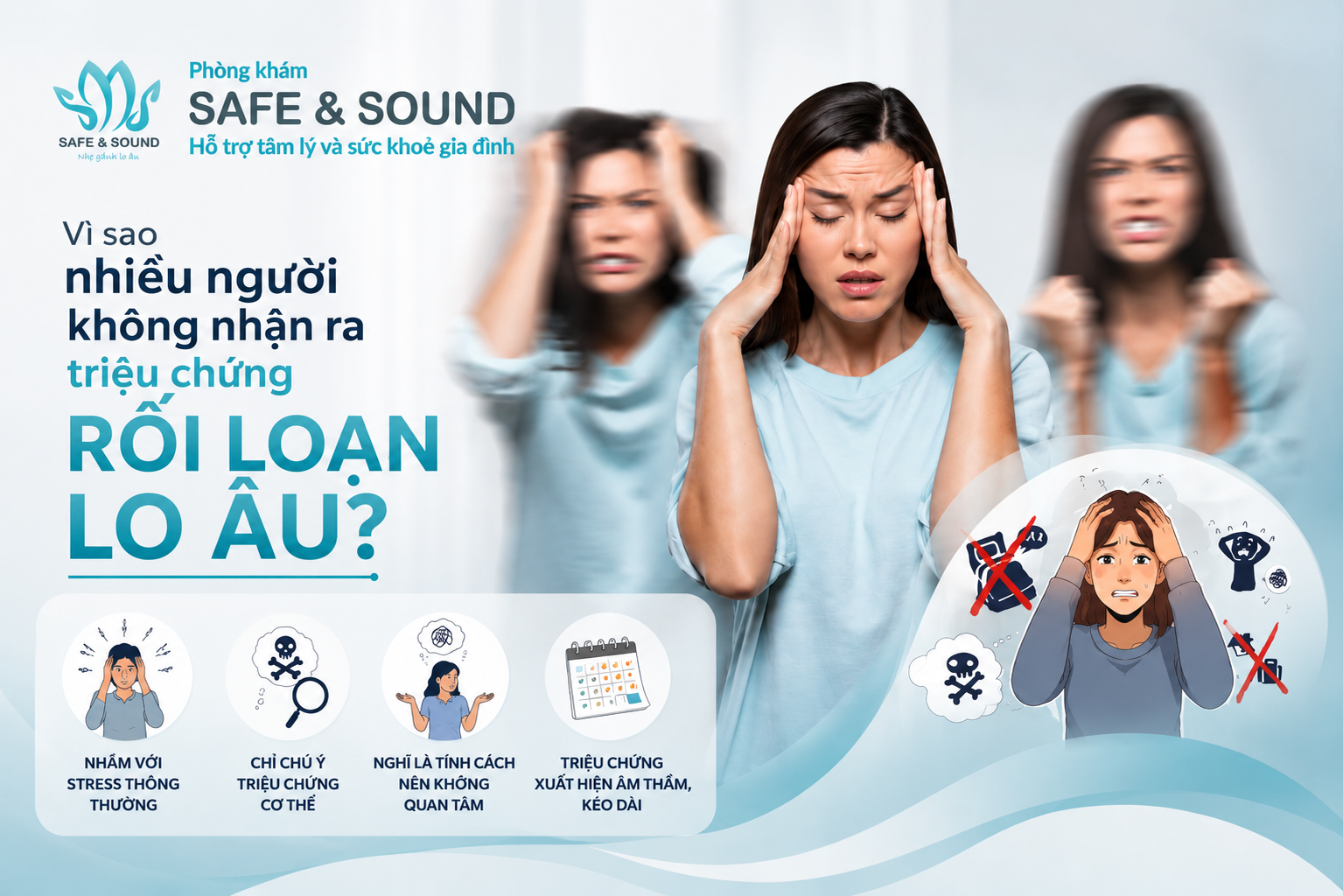
They think they're just stressed or tired.
Work, study, financial, or family pressures can cause stress for anyone. Therefore, when experiencing insomnia, difficulty concentrating, irritability, or frequent anxiety, many people assume it's just temporary stress.
However, normal stress usually subsides once the pressure is resolved. With anxiety disorders, feelings of insecurity can persist, even after the stressful situation has passed or is no longer as serious as before.
Some symptoms that are easily mistaken for stress include
- The anxiety persists even though the actual problem isn't that big.
- The feeling of stress did not subside even after resting.
- Easily fatigued, difficulty sleeping, and difficulty concentrating for extended periods.
- Always think about the bad things that could happen.
- Feeling unable to relax even when there's no urgent matter.
When patients repeatedly tell themselves, "It's probably just fatigue," they may overlook the early stages of anxiety disorder. This allows the condition to last longer and subtly impact their quality of life.
Focusing only on physical symptoms while ignoring psychological factors.
Anxiety disorders aren't just about thoughts. Many people experience problems physically first, such as rapid heartbeat, shortness of breath, chest tightness, dizziness, headaches, or gastrointestinal discomfort. Because these symptoms resemble many physical ailments, sufferers often focus on finding the cause in the cardiovascular, respiratory, or gastrointestinal systems.
A physical health check is necessary, especially when symptoms occur frequently. However, if the results don't fully explain the condition, patients should also consider psychological factors, particularly the level of anxiety, stress, and persistent feelings of insecurity.

Some physical manifestations that may be related to anxiety include:
- Feeling nervous, heart racing, palpitations.
- Shortness of breath, chest tightness, feeling of suffocation.
- Shaking hands and feet, sweating, dizziness.
- Muscle strain, headache, neck and shoulder pain.
- Stomach pain, nausea, digestive disorders.
- Difficulty falling asleep, restless sleep, and feeling tired upon waking.
When focusing solely on physical symptoms, patients often overlook the crucial question: "Am I living in a state of prolonged anxiety?" This is why many cases of anxiety disorders are diagnosed late.
Thinking that worrying is a personality trait and therefore doesn't need attention
Some people are naturally cautious, sensitive, or tend to overthink before doing something. Over time, they may come to see worrying as part of their personality and call themselves "worriesters," "overthinkers," or "difficult to relax."
However, a cautious personality is different from prolonged anxiety. If anxiety causes a person to have trouble sleeping, concentrate, avoid situations, constantly anticipate the worst, or be unable to relax, it's no longer just a normal personality trait.
Patients often overlook the problem by rationalizing it to themselves:
- "I've always been the type to worry too much."
- "I've always been the type to overthink things."
- "I'm just a little more sensitive than other people."
- "I guess anyone who's careful would do the same."
- "It's not serious enough to require assistance."
This way of thinking makes patients accustomed to stress and view it as normal. But if anxiety has affected sleep, work, studies, or relationships, that's a sign that needs to be taken more seriously.
.png) Symptoms appear subtly and persist over time.
Symptoms appear subtly and persist over time.
Anxiety disorders don't always begin with a distinct panic attack or a violent outburst. Many cases develop very slowly: initially, it's just more difficulty sleeping, more overthinking, increased fatigue, or feeling stressed more often.
Because the changes occur gradually, patients can slowly adapt to the unstable state. They still work, still communicate, still fulfill their responsibilities, but inwardly they always feel stressed, tired, anxious, or find it difficult to truly rest.
Some signs that anxiety has been silently building include:
- The feeling of anxiety comes on almost every day.
- The mind is constantly thinking about risks or bad things.
- It's hard to enjoy ordinary moments.
- I'm more irritable, tired, and overwhelmed than before.
- Avoiding certain situations for fear of increased anxiety.
- The quality of work, studies, or relationships gradually declines.
It's only when anxiety significantly impacts daily life that patients realize they've endured it for too long. Therefore, early recognition of small but recurring changes is crucial, rather than waiting until both body and mind are exhausted before seeking help.
>> See also: Is overthinking a sign of anxiety disorder?
Distinguishing between common anxiety and signs that require attention.
Not all worry is anxiety disorder. What matters is the duration, the ability to control the anxiety, and its impact on life. The table below helps to differentiate them more easily:
|
Criteria |
Common anxiety |
Signs to watch out for |
|
Reason |
It usually relates to a specific situation such as exams, interviews, or work pressure. |
It can occur frequently, sometimes for no apparent reason. |
|
The duration |
Gradually decrease as the problem is solved. |
Prolonged, repetitive, or increasingly difficult to control. |
|
Level of impact |
It causes stress, but I can still live and work relatively well. |
It affects sleep, concentration, work, studies, or relationships. |
|
Control |
You can try calming yourself down, resting, or dealing with the situation to reduce anxiety. |
It's hard to stop worrying, even though I know the worry might be excessive. |
|
Body expressions |
You may experience temporary nervousness or tension. |
Rapid heartbeat, shortness of breath, headache, abdominal pain, insomnia, or persistent fatigue. |
This chart is not for self-diagnosis, but it can help individuals recognize when anxiety has gone beyond a normal level of response. If symptoms persist and reduce quality of life, individuals should consider seeking additional support.
When should you seek professional help?
Everyone experiences periods of anxiety or stress. However, if feelings of anxiety occur almost daily, last for extended periods, and make it difficult to control your thoughts, this is a sign that should be taken more seriously.
You should consider seeking professional help when:
- The anxiety persists and does not subside even after the stressful situation has passed.
- Do you frequently experience insomnia, difficulty concentrating, fatigue, or excessive stress?
- Physical symptoms such as palpitations, shortness of breath, headaches, and abdominal pain occur repeatedly.
- You avoid work, studies, social interactions, or activities you used to do normally.
- Anxiety can negatively impact quality of life, relationships, and the ability to function.
Seeking support doesn't necessarily mean the situation is serious. It can be a step towards better understanding what's happening to you, identifying the right anxiety triggers, and finding appropriate support before the situation becomes prolonged.
Conclude
Anxiety disorder symptoms can manifest in many different forms, from persistent feelings of anxiety and difficulty controlling thoughts to physical manifestations such as nervousness, shortness of breath, insomnia, muscle tension, or gastrointestinal discomfort.
The important thing isn't whether a person is anxious or not, but how long that anxiety lasts, whether it's manageable, and how it affects daily life. If the symptoms are causing you trouble sleeping, difficulty concentrating, reduced work efficiency, or avoidance of relationships, seeking professional support is worth considering.
 If you notice these signs significantly impacting your work, studies, relationships, or quality of life, seeking support from a mental health professional may be the right step. At SNS (Safe & Sound Clinic), everyone has the opportunity to be listened to, assessed, and receive personalized support tailored to their individual needs and experiences.
